
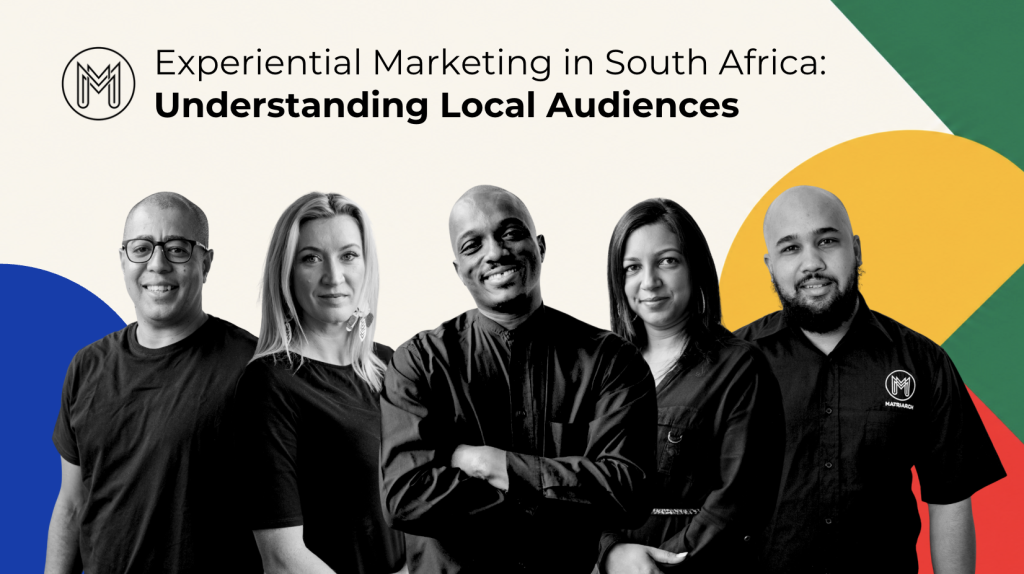
As South Africa celebrates Heritage Day on 24 September, we’re reminded that our heritage isn’t one story. It’s shaped by different languages, cultures, communities, places and lived experiences.
For marketers, that’s something worth thinking about too.
The strongest South African campaigns don’t simply acknowledge our diversity – they understand the cultural nuances within it.
And in experiential marketing, where brands meet people face-to-face, those nuances matter even more.
A national campaign doesn’t have to mean a carbon-copy rollout. At Matriarch, we believe in building one powerful central idea with enough flexibility to respond to where, and with whom, the experience is happening.
Because an activation isn’t experienced on a strategy document. It’s experienced in Sandton, Soweto, Umlazi, Durban beachfront, a Cape Town shopping centre, a university campus or a community event.

One concept. Different expressions.
A strong national activation needs consistency – but it doesn’t necessarily need to look or behave identically everywhere.
The brand positioning, campaign idea and strategic objective need to travel. The execution can flex.
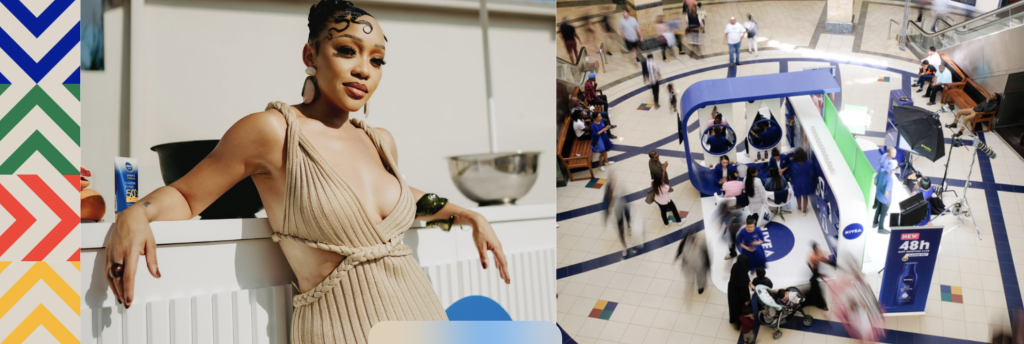
A mechanic designed for a high-footfall Johannesburg commuter environment may need to be fast and geared towards throughput. Take the same brand to a festival and the opportunity shifts towards entertainment, dwell time and social participation.
A retail activation may focus more heavily on conversion. A university activation might lean into competition and peer participation. A community activation may benefit from a more social, conversational approach.
The reason people stop and participate can change by environment and audience.
Language is cultural, not just functional
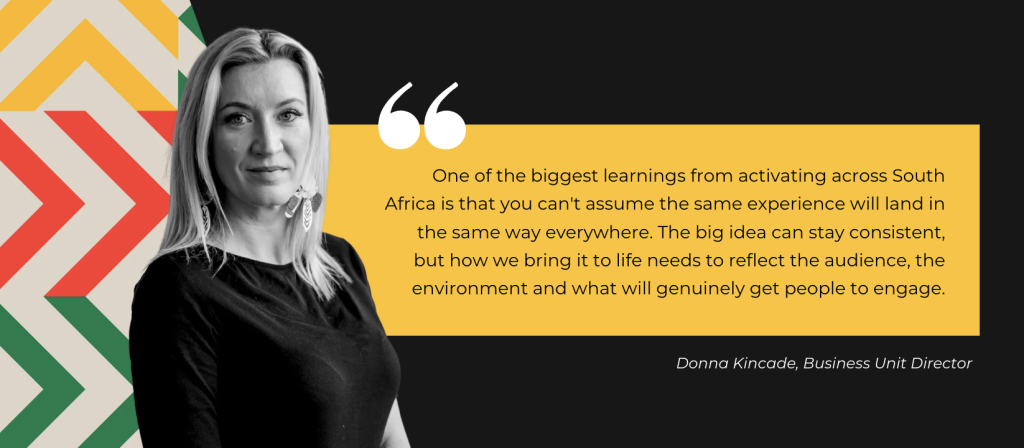
With 12 official languages and countless regional variations, slang and colloquialisms, language is one of the clearest expressions of South Africa’s heritage.
But translating activation copy isn’t necessarily localisation.
The way language is spoken changes between communities, generations and regions. The right phrase can create instant familiarity; the wrong one can make a brand feel like it’s trying too hard.
This is particularly important in experiential marketing because communication happens face-to-face.
The people delivering an activation are part of the creative execution.
Great brand ambassadors understand how to read an environment, start conversations naturally, switch languages where appropriate and adapt their approach to the people in front of them.
Cultural fluency isn’t just part of the strategy. It’s happening live.
Local behaviour should shape the experience
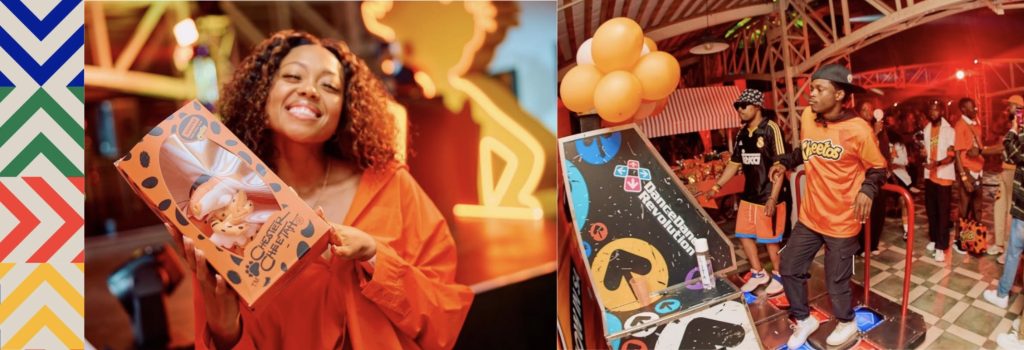
Culture is reflected not only in what we say, but in how we live, shop, socialise and spend our time.
A shopping centre, taxi rank, university campus, township high street and premium lifestyle precinct aren’t interchangeable simply because they offer footfall.
Someone moving through a commuter hub has different time pressures from someone spending a Saturday afternoon at a shopping centre. A consumer doing their weekly grocery shop has a different reason for engaging from someone discovering a brand at a music festival.
The question isn’t simply, “Where can we activate?”
It’s “How is this audience behaving here – and how can the brand add something worthwhile to that moment?”
Cape Town isn’t Joburg. Joburg isn’t Durban.
Our regions, cities and communities each bring their own character, cultural influences and consumer behaviours.
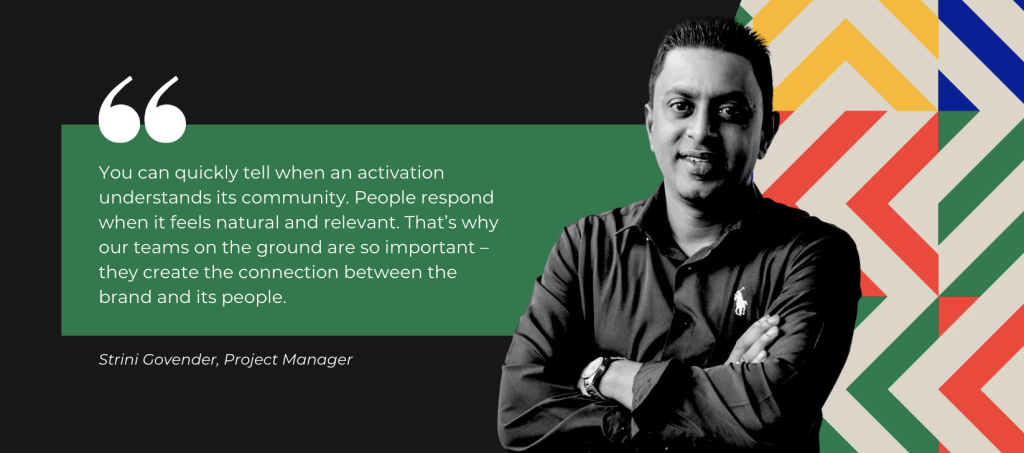
That’s why regional localisation is an important part of national activation planning.
The answer isn’t to create a completely different campaign for every region. It’s to understand which elements of the experience need to flex.
That could mean adapting the location, language, promoter profile, music, reward, mechanic or engagement style while retaining the central creative idea.
One campaign can be nationally recognisable while still feeling locally relevant.
Community matters
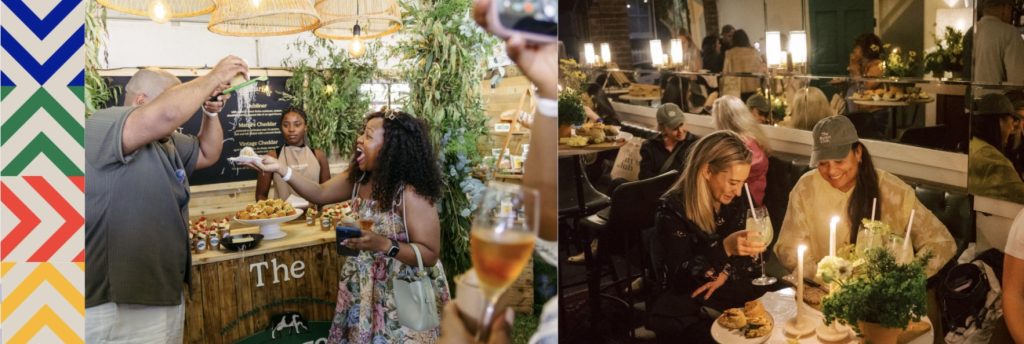
Heritage is also about community – the traditions, stories, celebrations and experiences we share with others.
South African culture is deeply social. Food, music, sport, humour and celebration bring people together, and that creates exciting territory for experiential marketers.
Can people play together? Can friends compete? Can someone bring another person into the experience? Can local creators, performers or community voices make an activation more relevant?
The strongest activations create social energy around the brand. People gather, watch, participate, react and share.
And when entering communities, brands need to understand the ecosystem they’re entering – who people trust, how the space is used and what role the brand can credibly play.
Good experiential marketing doesn’t simply arrive in a community.
It finds a meaningful way to become part of the moment.
The details do the localisation
Localisation doesn’t always require a completely different activation concept.
Often, it’s the smaller decisions that make an experience feel right: the language on a game interface, the music, brand ambassadors, sampling choices, prizes, length of the mechanic and the way consumers are invited into the space.
Even operational decisions matter.
Does participation require a smartphone? Is registration slowing down the experience? Does the mechanic work in a high-throughput environment? Can groups participate together?
These aren’t simply executional details.
They’re part of how people experience the brand.
One country. Many ways to connect.
Heritage Day is an opportunity to celebrate what makes South Africa extraordinary – not only our diversity, but the cultures, communities and experiences that continue to shape who we are.
For brands, understanding that richness matters.
At Matriarch, more than 25 years of creating experiential campaigns across South Africa has taught us that meaningful connection starts with understanding the people you’re creating for.
One brand. One big idea. Many different South African realities.
The opportunity isn’t simply to show up across South Africa.
It’s to understand how to show up meaningfully in each part of it.
Happy Heritage Day, South Africa.